
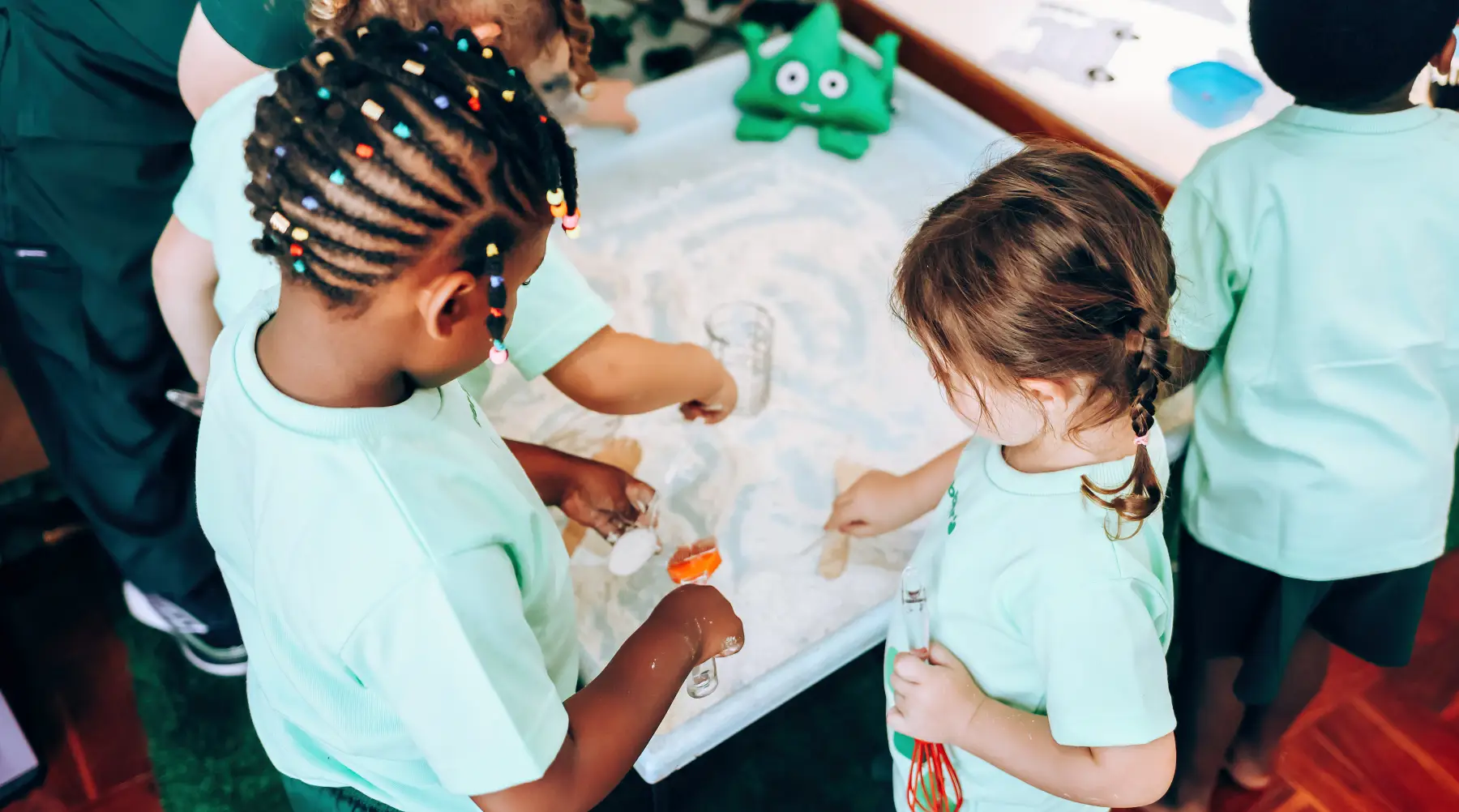
Holistic learning may sound like a broad educational idea, but in the early years of a child’s development it is actually quite practical.
Holistic learning begins with recognising that a young child does not develop in separate compartments. How they feel, move, communicate, relate to other people and make sense of new ideas all influence one another. A good early learning environment pays attention to all of it.
At Dibber International Preschools, holistic learning means viewing the child as a whole person and recognising that social, emotional, physical and cognitive development are closely connected. Learning is therefore not confined to a particular activity or a set period of the day. Play, relationships, movement, conversation and everyday experiences all form part of how a young child begins to understand themselves and the world around them.
Read more about the power of play.
no categorisation
“Children do not separate their development into neat categories,” says Ursula Assis, managing director of Dibber International Preschools South Africa. “A child building with blocks may be solving a problem, practising coordination, negotiating with another child and dealing with disappointment when the structure falls. For that child, it is one experience. There is a great deal happening inside it.”
taking a different view
This way of thinking asks adults to look differently at what learning can be.
A puddle outside can prompt questions about water. Setting the table brings counting naturally into the day. Two children deciding who gets a particular toy are learning something about communication, compromise and their own emotions.
For parents, holistic learning can also change what they notice.
Learning might be visible when a child counts five stones. It may also be there when they persist with a puzzle, find the courage to join a group, comfort another child or work out a new way to solve a problem.
None of these moments needs to be turned into a formal lesson for learning to take place.
The educator’s role remains important: activities are planned, children are guided, and developmental needs are considered. However, there is also room to observe what a child is interested in, where they are struggling and when an unexpected moment presents an opportunity to explore something further.
The value often lies in what the adult notices and does next.
provides emotional security
Holistic learning also leaves room for the emotional side of childhood.
A child may understand how to complete an activity, but hesitate because they worry about getting it wrong. Another may need to move before they can concentrate. A child who feels secure enough to experiment may be more willing to keep trying when something does not work the first time.
“Children need the experience of discovering, ‘I can do this’, but they also need to know that it is safe when they cannot do it yet,” Assis says. “That combination gives them room to stretch themselves without feeling that learning is a performance.”
learning at their own pace
This does not mean academic learning disappears. Early literacy, numeracy, language and problem-solving still have their place. Holistic learning simply places those skills within the wider development of the child.
It also allows for the reality that children do not all arrive at learning in the same way.
One child may watch for a long time before joining an activity. Another learns through touching, building and moving. Some children ask endless questions. Others quietly experiment until they find an answer for themselves.
A holistic approach gives educators space to respond to those differences rather than expecting every child to experience learning in precisely the same way.
The intention is to give children opportunities to develop across different parts of themselves during the ordinary rhythm of the day.
Childhood is full of these small opportunities, which become part of a much bigger picture of a child learning how to think, feel, communicate, relate and find their place.